Sample sheet — knitting
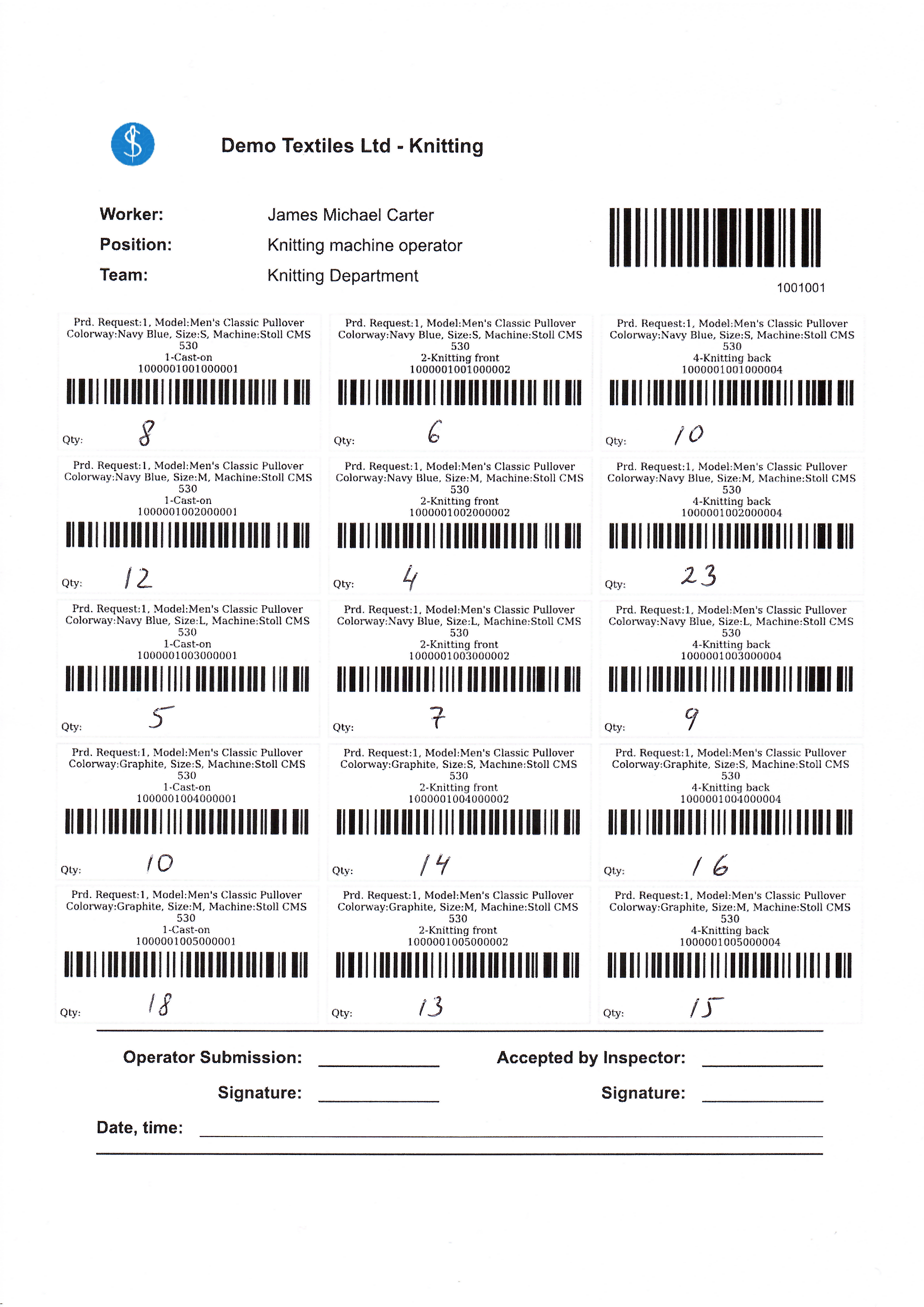
A knitting sheet with handwritten quantities and production barcodes.
Partner Program for Garment Manufacturers
Full free access to the Enterprise plan until 31 Dec 2026 • only for the first 20 companies
See how StitchOne streamlines production reporting: capture a production sheet, let the system read handwritten quantities and barcodes, review the result, and save it — with less manual work and fewer errors.
A short screen recording showing the real flow — from capturing the sheet to getting structured data ready to save.
This video is delivered by Gumlet. Loading it connects your browser to Gumlet and may transmit your IP address and technical device information.
Download sample production sheets and try the workflow yourself.
A knitting sheet with handwritten quantities and production barcodes.
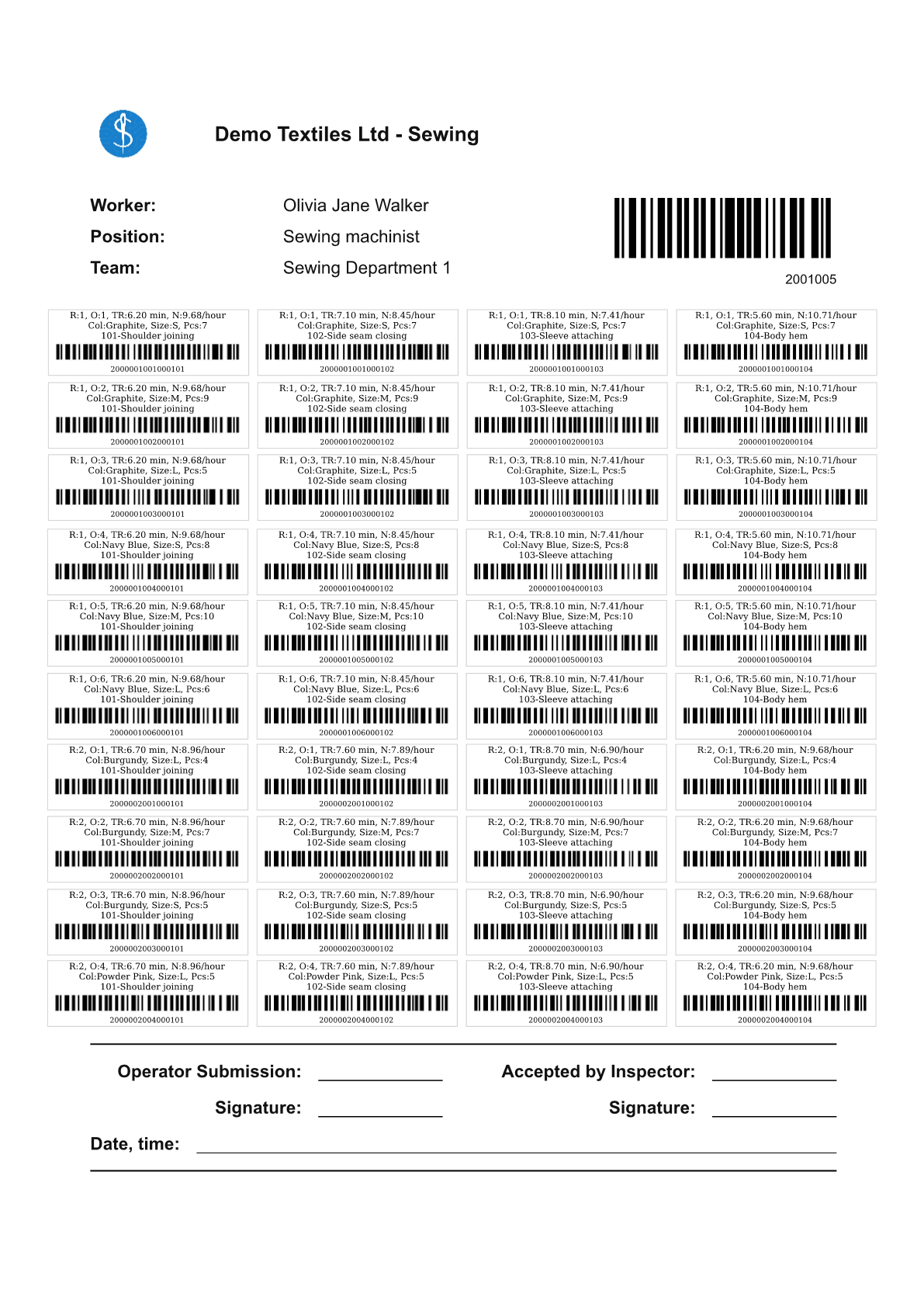
A sewing sheet with a denser layout and multiple production barcodes.
You are always in control.
Before anything is saved, the supervisor or operator reviews the extracted values and makes any needed corrections. Your team confirms the final result before it becomes an ERP record.
In a real production environment, this flow is not just a convenience. It reduces administrative effort, speeds up reporting, and gives managers more reliable production data.
This workflow is especially useful for companies that still rely on paper production sheets but want faster, more reliable digital reporting without adding complexity to the shop floor.
Get faster visibility into completed work, delays, and actual output without waiting for manual data entry.
Capture and review reporting data quickly, with less paperwork and less repetitive office work after the shift.
Make decisions based on more timely and trustworthy data across production, planning, and warehouse processes.
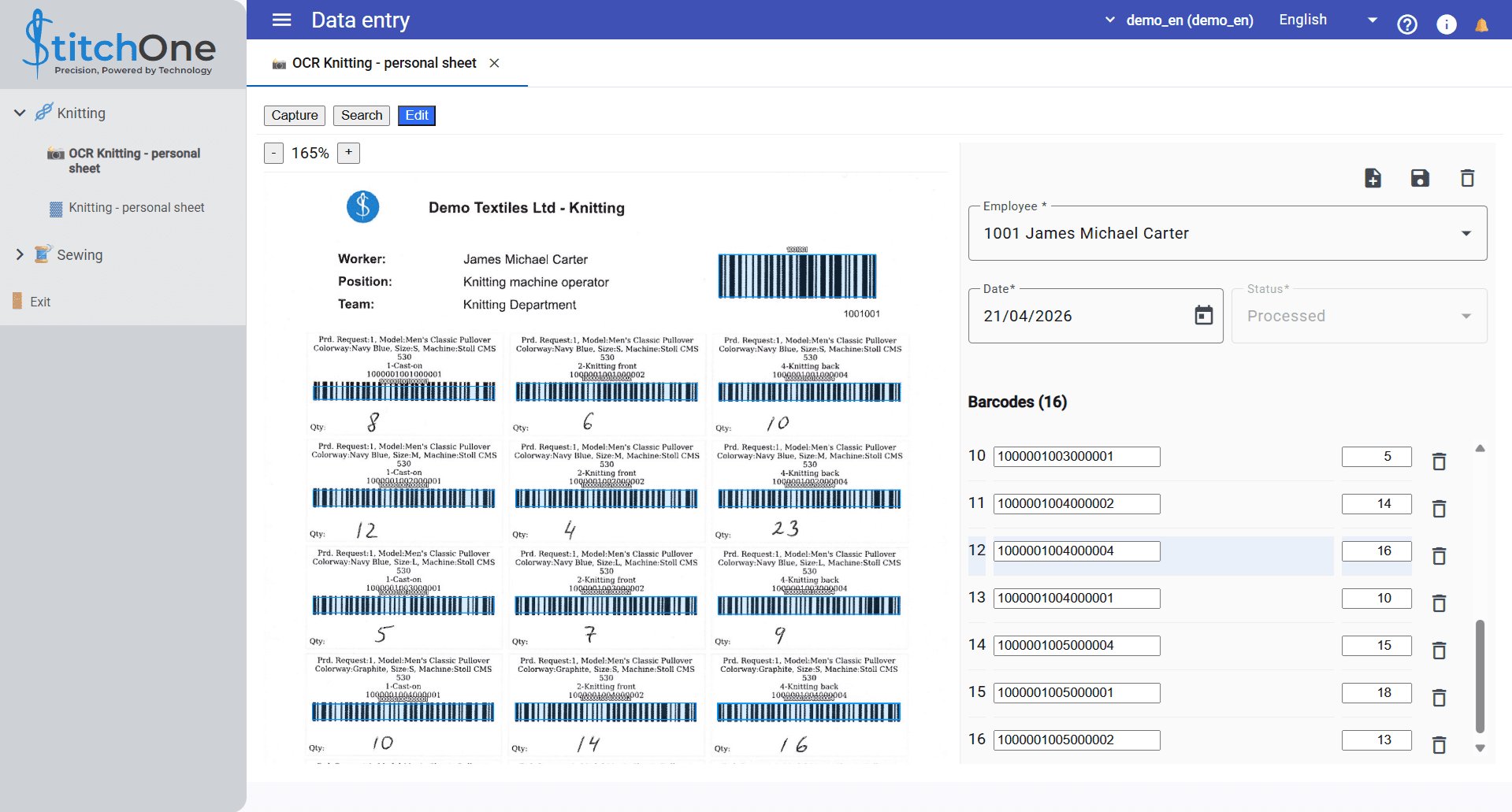
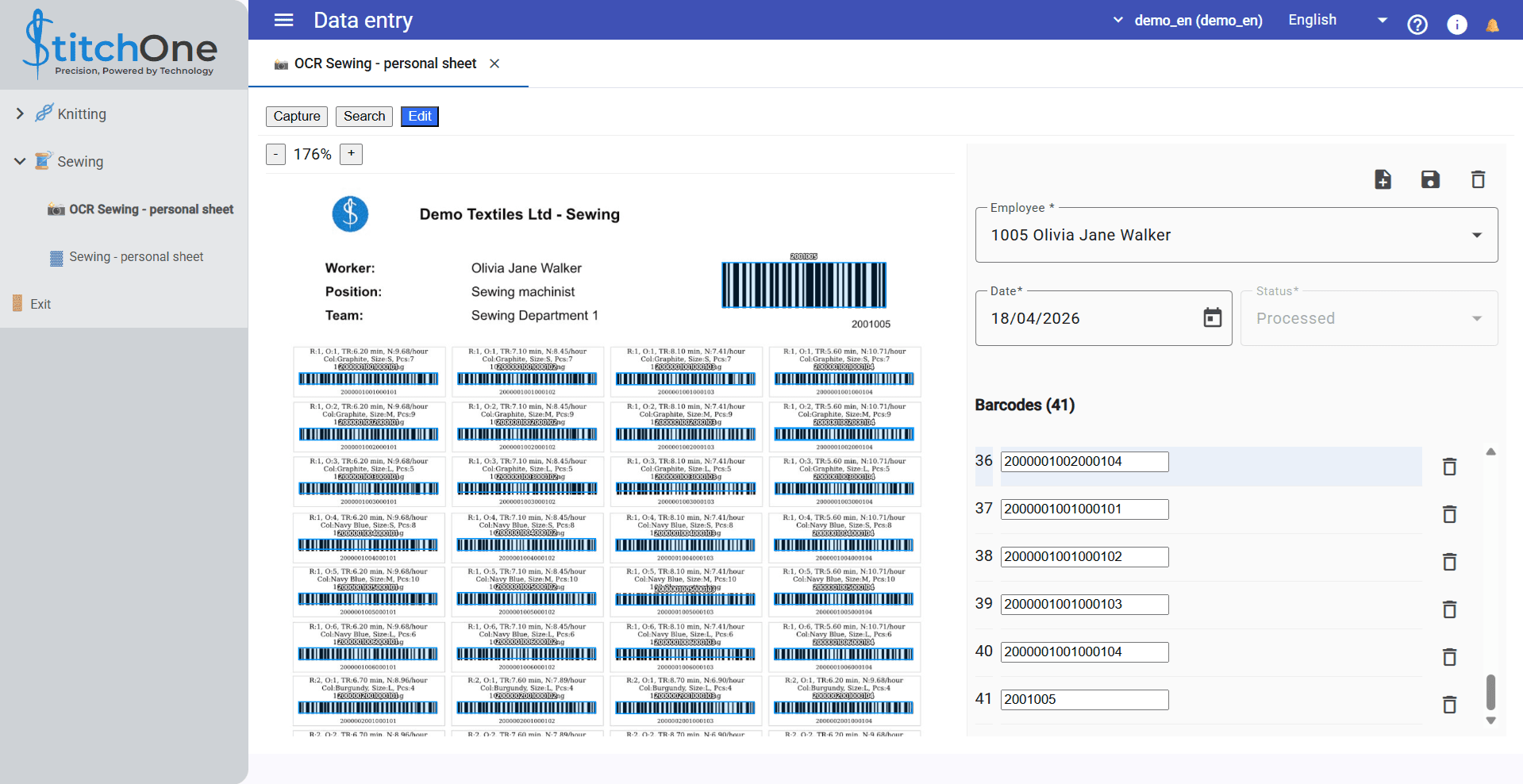
After processing, the system prepares clear, structured data for review, correction, and saving.
The real value is not only in recognition itself, but in what it changes operationally in the daily reporting cycle.
Production data moves from paper to ERP much faster, helping teams close shifts and update progress sooner.
Built-in review before saving reduces incorrect entries and improves confidence in reports and KPIs.
Once data is recorded faster, managers can react earlier to deviations, bottlenecks, or missing quantities.
Start a free trial or request a demonstration to see the complete flow — from the production sheet to a reviewed ERP record.