The shift ends, but reporting continues
The production work on the line is finished, but then collecting, checking, and manually transferring data begins.
Partner Program for Garment Manufacturers
Full free access to the Enterprise plan until 31 Dec 2026 • only for the first 20 companies
In many factories, the real end of the shift comes later than it should, because after production ends, teams still need to collect, read, and re-enter data manually. A better approach closes reporting faster, with less manual work and more timely management data.
The production work on the line is finished, but then collecting, checking, and manually transferring data begins.
Instead of calmly closing the shift and preparing the next day, they remain busy with sheets, checks, and retyping.
By the time the data is entered into a spreadsheet or ERP, the real picture of execution is already outdated.
In real production, the end of the shift is rarely just the moment when work stops. After the last operation, another phase usually begins — collecting sheets, checking handwriting, reading barcodes, and transferring data into spreadsheets or ERP.
This is exactly when pressure builds. If reporting is slow, shift supervisors stay occupied with administration, and managers receive the real execution picture later.
When every shift ends with manual processing of information, it is not just an inconvenience. It becomes a structural source of delay, missing data, and weaker operational control.
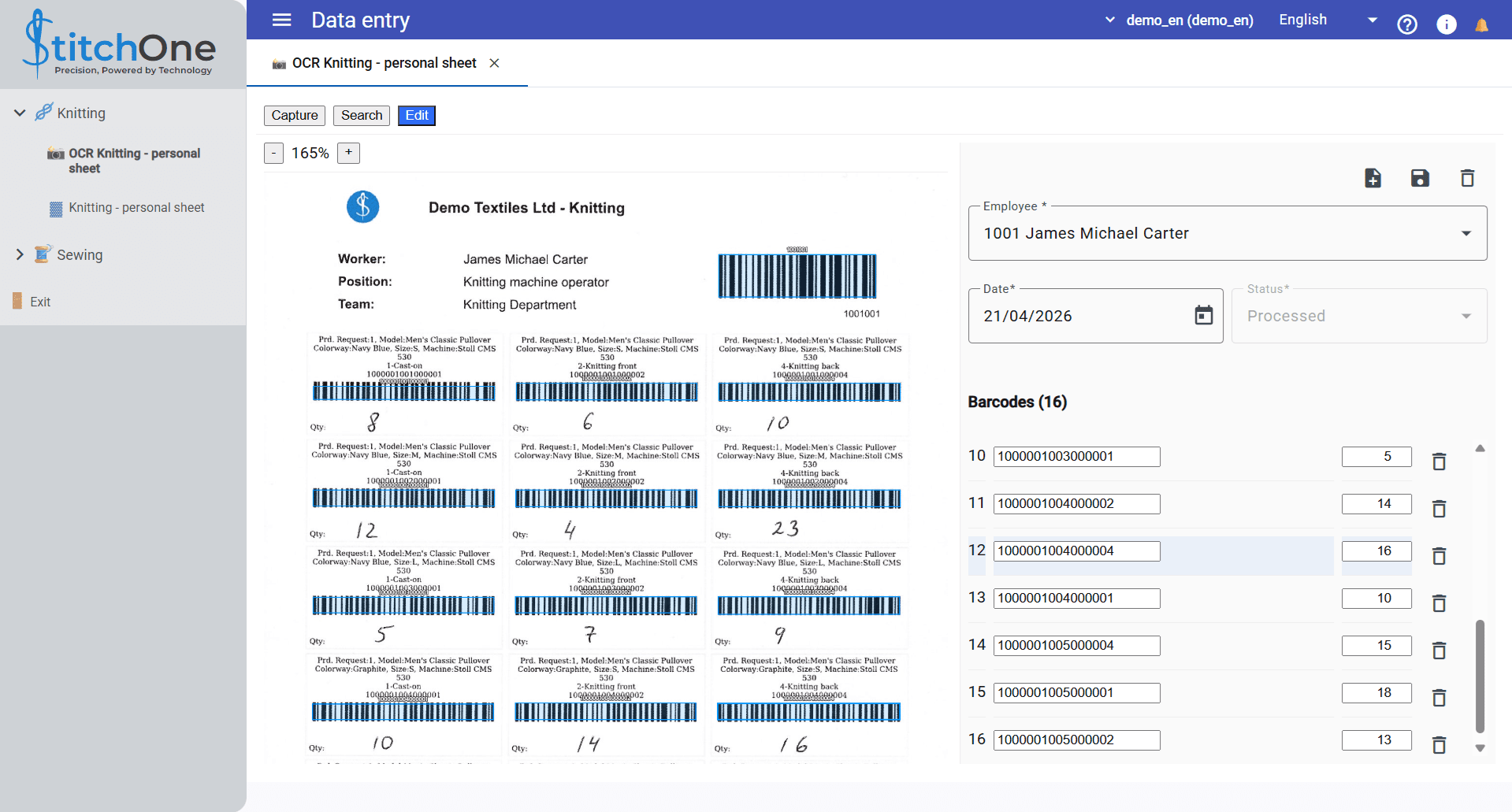 *real view
Even when production itself runs normally, end-of-shift reporting can still delay next decisions and create extra pressure for the team.
When reporting depends on physical sheets, the first step after the shift often creates delay on its own.
Handwritten quantities, notes, and production codes require additional time for reading and verification.
Retyping creates the risk of omissions, incorrect values, and repeated checks.
If reporting is delayed, underperformance, missing quantities, or deviations become visible too late.
The goal is not only faster input, but fewer manual steps, faster review, and earlier availability of ERP-ready data.
Instead of waiting for manual re-entry, the forms are prepared for processing right after the shift ends.
OCR and barcode recognition reduce manual work and speed up preparation of the result.
The shift supervisor or operator reviews and corrects only what is necessary instead of typing everything from zero.
Information enters ERP earlier and becomes immediately useful for reports, KPIs, and management control.
When data is available earlier, planning, coordination, and reaction for the next shift are better.
The StitchOne approach is aimed exactly at making the heaviest part of reporting lighter — especially at the end of the shift, when pressure is highest.
Useful for faster processing of production sheets at the end of the shift, with review before saving.
See how the process looks from capturing the sheet to getting data ready to save.
If you want the broader context, also see the page about reducing manual production reporting.
See in more detail how OCR supports handwritten quantity reading in sewing and knitting.
Faster end-of-shift reporting is not only an administrative convenience. It affects the rhythm of work, the quality of information, and how confidently the next day can be managed.
This solution is especially useful for teams where end-of-shift work takes too long because of manual processing of sheets and data.
For teams where too much end-of-shift time is still spent processing forms instead of focusing on control and next-day organization.
For companies that want earlier visibility into actual execution and faster reaction to delays or deviations.
For organizations that want more reliable and more timely production data without a heavy implementation project.
If you are unsure whether the end of the shift is creating unnecessary pressure, ask yourself the following:
If these questions are part of your daily reality, end-of-shift reporting is probably one of the places where your team could save the most time and stress.
We can show how faster reading, review, and saving of your production sheets would look based on the way your team actually works.